Monday, April 18, 2016

First Excerpt from The Reckoning of Asphodel

As promised, here's the first excerpt from my upcoming book release, The Reckoning of Asphodel, coming May 3, 2016!


We did not have long to wait. Less than a minute later, I saw the bobbing of torches through the trees. Thirty seconds after that, they thundered around the bend. The leader pulled up when he saw the flaming arrow burning merrily in front of him. Over my head, bowstrings sang as Mylan and Morrote fired two more flaming arrows to land near the first.
The leader’s horse reared and the man had all he could do to control it. I watched in cold silence while he struggled with his mount. Once the horse was calmed, I called out in a clear voice. “You have entered Asphodel without my permission, stranger. What is your name and affiliation?”
“Who in the hell are you?”
“I am Tamsen, Countess of Asphodel,” I retorted. “You did not answer my question, commander! The light is in your eyes, not mine, and I can see your uniforms and insignia.”
“Lord Spesialle ordered me to prepare this castle for occupation.
“Spesialle has no claim to Asphodel. His claim is forfeit, as is due a regicide and traitor.”
A low murmur broke out among the troops, but the commander ignored it. “How do I know that what you say is true?”
“You don’t,” I said pleasantly. “However, I should inform you that I have a company of Elven archers behind my walls that are itching to use you for target practice.”
“I don’t believe the lies of any squatting peasant wench,” the commander growled. “My orders are to take this—”
Before I knew what was happening, the man screamed. Brial had notched and fired an arrow that pierced the man’s leg in the half-inch gap between the bottom of his mail shirt and the top of his high, thick leather boot. “If you speak one more word about my lady the next arrow will be through your throat!” he called in a clear, cold voice. “Any man that moves in this direction will die. Make your decision quickly. We want to have enough time to burn your corpses and get a good night’s sleep.”
“Good shot,” Glaucon noted with dispassionate approval.
“Easy shot,” Brial shrugged even as his voice grew tighter. “Even after Tamsen warned them, they kept their torches burning.”
The commander grimaced in agony as he removed the arrow from his leg. He examined the distinctive Elven fletching, and then said something low to the men at his back.
As he began to turn his horse’s head, I called out, “Take this message back to your master, dog: Asphodel is once again held by the heir of the house, and will remain so. On the day he enters my lands, I will kill him with my own hand. There is no succor in Asphodel for the man who killed our King.”
He glared at me silently, his face twisted with hatred. Then, his troop turned their horses and sped into the night.
“You should return to the castle, milady,” Anner suggested. I could just see his gray eyes glint in the moonlight. “They may try to double back. Glaucon and I will keep watch.”
Before I could respond, Brial gripped my arm and steered me back into the castle. Grimly, he marched me up the steps and into my room. Once there, he tossed his bow in a corner and glared at me.
“What?” I asked, confused.
“Why did you do that?” he grated. “What plausible excuse for such idiocy can you possibly have?”
“I haven’t the faintest idea what you’re talking about.”
“The only reason this castle could be safe for you is if your uncle doesn’t know for certain that you are here!” Brial shouted. “Now he not only knows where you are, but you make matters worse by sending him a message that a man like him cannot ignore.”
“It doesn’t matter if he knows for certain or not.” I retorted, my own temper rising. “He’ll come here regardless, Brial. He needs Asphodel to act against the Elves.”
“You don’t know that.” Brial enunciated carefully, evidently trying to rein in his temper. “You are only guessing.”
“I know it. I don’t know how I know, but I do. Spesialle will be here within three months, Brial, and he will not come alone. He will bring his army.”
Brial opened his mouth and then shut it abruptly. We glowered at each other for a minute and then the breath left him in a loud exhalation. “If you ever do anything like that again, I swear to the gods I will throw you into the first room with a stout door and lock you in,” he said in a slow and carefully controlled voice. “Don’t fight me on this, Tamsen. If you will not behave in such a way as to protect yourself, I will not allow you to endanger yourself further. If I must, I will force you to listen to me.”
“You wouldn’t dare!”
“Try me.”
“Well then you’d better hope that the door consists of something other than wood,” I retorted spitefully. “If it isn’t, I’ll burn my way out.”
“I meant what I said, Tamsen.”
He kissed me, his fingers digging painfully into my arms. When he pulled back, he looked at my shocked face and laughed, not humorously, but with an ugly, ragged laughter. “I told you not to let yourself get involved with me, I told you it would interfere with my ability to protect you! You don’t listen to anyone, Tamsen, and your pride will be your undoing! You are not omnipotent, my lady.”
His tone was so furious I actually winced.
“If you will not attempt to protect yourself, then I will do it for you, You will not like my methods, but you won’t have any choice. I will not stand by and watch you get yourself killed, and by the gods, you will obey me!” He punctuated each word with a shake. “I love you, Tamsen, but at this moment I could break your neck.”
He kissed me again, and then pushed me away. “By the way, don’t go on thinking that you are the only one here who has magic,” he purred. “The Ka’breona element is metal; I can build a door that all your magic will not break.”
"I wouldn't count on that!"
He turned to leave and spotted Morrote standing grimly in the door, his nostrils flaring. For one long, tense second the two Elves stared each other down, then Brial said evenly, “Get out of my way, Ka’antira. I will take your watch tonight and you can remain here to guard her.”
“From whom?” Morrote growled.
“From me, Elflord!” Brial snarled at him. “Most particularly, from me!”
Without a look back, Brial stalked by the stunned Elf and disappeared into the blackness of the outer corridor. I exhaled slowly and sank into one of the chairs by the fire.
Morrote looked after the vanished Brial with an odd expression on his face. Then he snorted a short bark of laughter and stepped into the room.
“I’d really rather be alone, uncle,” I said sadly.
“I don’t think that’ll ever be an option for you, Tamsen,” the Elf said with a twinkle in his eye. “You two were meant for each other.”

Saturday, April 16, 2016

Let's Get Ready for the Asphodel Cycle!

So I've jumped back into the world of Asphodel with both feet. Time to get this show on the road.

As my longtime readers--all five of you--may remember, from 2007-2009, my first fantasy series The Asphodel Cycle was published. The books did fairly well--top ten on multiple online retailers, great reviews, some fairly awesome awards and nominations, and lots of hate mail when I killed off an extremely important character that was, apparently, loved more than I realized. 

And then, of course, the publisher went defunct a few years later while I went on to bigger and better things. 

But the Asphodel world wouldn't shut up. I really like playing in the fantasy-mythology mash up sandbox. It combines all my favorite things. And while I went on and started delving into more literary fantasy, every once in a while I'd sneak into a secret file and write some Asphodel for fun. Then, last fall, the story suddenly took off on me--so that now I have an entire SECOND series set in the  Asphodel world, bringing the adventures of Tamsen and Brial to eight books total. 

And then I was stuck.

The first rights to the original series were gone, so that automatically killed off the chances of selling the second series with the same characters. And for the first time, I considered self-publishing. After all, I ran a publishing company. And that's when it came to me.

I decided I would reissue the first series in four consecutive months--and the second series in the four subsequent months. That means I will be releasing each book in the series a month apart. (A publishing plan I'd dearly love for George RR Martin to subscribe to by the way, and NO-- John Snow will NOT remain dead. Duh.)

Here's what you need to know to prepare yourself!

So--release schedule.

THE ASPHODEL CYCLE-- reissues


The Reckoning of Asphodel--May 3, 2016
The Redemption of Asphodel -- June 6, 2016
The Temptation of Asphodel -- July 5, 2016
The Apostle of Asphodel -- August 2--2016


The world of Asphodel lives again in the never-before published sequel series The Black Dream coming this fall!

Servant of Dis -- September 1, 2016
Prisoner of Death--October 1, 2016
Sorcerers of Hell --November 1, 2016
Gods of Rebellion --December 1, 2016

Cover art by KMD Designs

Blurb:
Tamsen de Asphodel watched as her parents were killed—murdered by her sorcerer uncle. Raised by her Elven kin, Tamsen knows her destiny is to avenge them both. Unfortunately, Tamsen’s destiny is complicated. She is the sole heir to her human father’s estate, but she is also the last remaining heir to the Elven throne. The Elves, especially the Scout Brial, are suspicious of her human ties and her magical power. Her magic is unique—neither human nor Elven, dangerous, and difficult to control. And when she and Brial fall in love, it is a relationship the Elves will not accept. But when her uncle moves to destroy the Elves, war explodes across both kingdoms. Only Tamsen, with Brial at her side, can bring human and Elf together to fight against him. In the reckoning that is coming, she will need both sides of her conflicted nature…and the aid of a goddess.    

Important sites/accounts

Writing website The Cache Vault

Tomorrow--excerpt from Reckoning. Later this week--cover art for Redemption of Asphodel. Also later this week--a basic series blurb for The Black Dream--another wild ride through classical mythology and traditional fantasy, where the stakes are greater, the cost is higher, and the death toll rising. 

Also, I will be creating an online lexicon for the world that will cross over between here and my website--the mythology, the language (yes, it's Latin-ish), the history, the families--all that good stuff. 

Did I mention my new website? The Cache Vault is now up and running--and will be getting bigger like pretty much anything I write. You might note some interesting news while there about my pseudonym. 

So find me on social media--friend me (I take a lot of Twitter and Facebook breaks) and get ready. Oh and the last thing--

Have a great week!

Thursday, March 31, 2016

Let's Have a Chat about Asshats Shall We?

Okay. Let's be frank. We all know people who in the privacy of our minds (or out loud) are serious jerks. Our world is populated with these types of idiots--whether it's the sour-faced cretins who are abusing the cashier at the grocery store or the bigoted morons we encounter on Twitter. For convenience's sake (and because I like the word) let's just lump them all together under one linguistic aegis and call them asshats.

And before anyone complains, 'ass' can be found in the Bible and 'hat' is a lot nicer than 'hole'. Basically I'm calling these asshats haberdashery for a donkey, so slow your roll. 

When I tended bar, I dealt with asshats every night. Some were willfully rude; others didn't seem to have the slightest clue they'd been nominated for the asshat club. Every shift I worked, asshat relations were a huge part of my job. For people who exist upon the income they receive from tips, being able to handle the asshat had serious repercussions. Now, an asshat who was a moderate drinker I could usually deal with. The real problem came when the asshat in question drank a lot. Once an asshat gets a buzz, his proportionate asshattery grew accordingly. 

And since the biggest asshats at my job were related to the owner of the bar, my ability to relate to them was essential. 

For a while, I had to play along with the asshat games. But once they reached a certain point, I had to put my foot down. Coming behind my bar? That was a no-no. Driving while trashed? Equally a no-no, as I proved several times taking asshats home, calling them a cab, or calling my boss when his relatives were the asshats in question. For the most part, my asshat relations were fairly successful. Of course, the asshat has the final word. Annoy the asshat too much and he wouldn't tip. 

But if someone was being a hardcore asshat, I didn't really care. And if the asshat refused to play along with my 'this is my bar shift, and you will not screw it up' mentality, there was always another option. Nothing is more gratifying than throwing an asshat out of a bar. Nothing. Once I pulled a straight up Dukes of Hazard slide over the bar to break up a fight between eight guys. Finally got them all in the parking lot and a regular called the cops for me. Got hit full in the face,but since I was wading into the fight to pull someone out by their ankles it was my own fault. 

What I hadn't counted on was the asshat-in-chief getting into his car and trying to run me over. 

But then again, I have a high percentage photographic memory, and his license plate was fairly easy to remember. The cops picked him up three blocks away, thus gratifying the 'send the asshat to jail' mental fantasy I had silently daydreamed about for hours. 

Unfortunately, the natural habitat of the asshat has evolved in recent years. Instead of wandering the wilds of the outdoors, now the asshat has taken to living in his mother's basement or a rented double-wide, where he stalks his prey online. He's lurking right now on your Twitter feed, waiting to pounce on the unwary. 

I am rarely unwary, and having a good vocabulary, a fast WPM typing speed, and the ability to think on my feet has brought me into conflict with this most elusive breed of asshat. Unfortunately, the internet doesn't require an IQ test before someone is allowed to participate in social media. Or a spelling/grammar test either, which I find reprehensible. And while you can prune your contact list to people with merit, you cannot prune your contacts' lists. And that's how the heavily-disguised asshat slips into your feed. Someone says something objectionable, and you end up getting into a flame war on Twitter with some asshat whose political memes are desecrating your feed. 

Allow me to warn you--the asshat is incapable of learning when they've been beaten, and will flame on long after he'd actually run out of gas. Then all of a sudden, when it's obvious that you have won, the asshat resorts to name-calling of the worst order. I can't even tell you all the creatively spelled curse words that have been directed at me online. It's like they know that because I am a writer/editor, every ghastly misspelled degrading term impacts me just that much worse. Strangely enough though, the asshats who don't know the different between 'your' and 'you're' always manage to spell 'bitch' correctly. 

It baffles me.

There's a particular asshat on my radar right now who is a caller on the Paul Finebaum show. He is only capable of carrying on flame wars when they're one-sided--because the cowardly asshat blocks anyone who disagrees with him. So he spews forth these monologues denigrating good people that I personally like, and is fundamentally incapable of tolerating anyone who disagrees with him. As I am allergic to homophobic misogynistic bigoted racist pigs, I've been blocked for a long time. But that doesn't stop him from trashing me all over the internet. This asshat's life is so empty that all he can manage to do is spew forth poison online about someone who can't even see it firsthand--and call a sports talk show to plug Donald Trump. And his  wholly imaginary past. 

Which brings me to the ultimate point about asshats. Regardless of whether you encounter them in public or online, the asshat is fundamentally a very sad,lonely person. Their sole empowerment is acting like an asshat. Sitting down at that keyboard is the high point of their day. Because they have nothing positive to offer themselves,all they can offer is negativity to the world in general. So in the end, stepping on an asshat is kind of akin to stepping on a cockroach.

Kind of gross but wholly satisfying. 

Wednesday, March 30, 2016

Turning Into a Self-Published Author--Part 1

Okay--I'll admit it. I've been spoiled. Throughout my career, I've always had a publisher who dealt with the cover art, the layout, the formatting, the uploading, some publicity. But now that I'm reissuing my first fantasy series The Asphodel Cycle, I have been forced to turn into a self-publishing author. 

And yes--I have a leg up because I've been a publisher--as in I published other authors' books. My experience first at AMP and then at Musa gives me a unique perspective on everything a self-published author has to do. 

The difficult part for me has been separating the authorial responsibilities from the publishing ones. 

Here's the deal: if your work is picked up by a small publisher or a big one, they are the ones spending money for all the things you need. And I know how expensive those things are because we were the ones paying people to design the cover or format the ebooks. As a self-publisher, you want your books to compete favorably with publisher-released titles. That means that you--and I--have to spend money to make that happen. And nothing is more important than cover art. 

Do yourself a favor. Unless you have a lengthy background as a book designer, don't try to make your own cover using Paint and Photoshop. Just...don't. Go to a reputable cover artist and just fork out the money you can afford to get a professionally designed cover. If you don't, you're just throwing your book away down a big black hole. Your cover art is the most important promotional tool your book has. It's the first thing a prospective customer sees, and is the deciding factor as to whether they click through to your blurb and sales page. Do not skimp on the cover design!  There are artists out there who will design a good cover for under $150-200. Go to self-published authors you know and find out who did their cover.  

Ditto and double that for interior layout, design, and formatting. If you want to spend a frustrating 48 hours trying to detangle the formatting directions each separate e-reader requires, knock yourself out--and consider yourself lucky if it ONLY takes 48 hours. Or, open up your wallet and go to a reputable design firm--I use KMD Designs, which is run by my former Musa partner Kelly Shorten. Not only are her designs incredibly solid, but mistake-free. And her prices are very, very reasonable--far less than I had originally anticipated. Check out their website, prices, and portfolio here.  Or find someone else that you are comfortable with who possesses the knowledge you do not. It's well-spent.

But all this notwithstanding, the biggest obstacle for many of us I think is on the promotional end. My first release, The Reckoning of Asphodel, comes out in a little over a month. So I am going to have to take the 12-15 hours a day I've been spending writing and use at least half promoting my books. And when the sequel series comes out this fall, I will probably have to spend more.  

The main thing you HAVE to do in order to promote your self-published books is to create an online presence. Yeah, I know--everyone tells you that. But it's essential--Twitter, Facebook, Pinterest, Instagram, blogging, participating in online activities, Goodreads, Amazon author page--all these things are cogs in the wheels that sell your book. I DO NOT MEAN to hop on Twitter 4-5 times a day and post a plug for your book. I'm an author, and I mute other writers who do that on my feed. So don't be an obnoxious 'buy my book' whore. Create daily content--like, say for example, a blog--and use your social media presence to promote THAT. That sends people to your blog, where all your book information should be prominently displayed. 

These preliminary steps should be fairly automatic for any writer about to launch onto the ocean of horror known as self-publishing. But if you do it right, if you invest in your books and create that online presence, you can at least get people to LOOK at your book. And if they don't look at it, they aren't going to buy it. So get busy! Get all those bits going before your book even hits the market. And then check back as I dig deeper into the process in a future post. 

Friday, March 11, 2016

The Crazy World of Chronic Pain Patients

So, I am a chronic pain patient. Thanks to an automobile accident in May of 2002, I now have a broken artificial disc in my spine that is prevented from severing my aorta by a spinal fusion. The rest of my spine is crumbling now as a result of the stress and the previous surgeries. Obviously, this is a painful and constantly deteriorating condition, and one that I deal with on a daily basis. As a result, I am a patient at a pain clinic here in Ohio. 

I absolutely love my pain management doctor. He is sympathetic and very good at what he does. But thanks to the growing restrictive laws regarding the treatment of chronic pain patients, his ability to help me is being hampered by the government we both pay taxes to. Right now, I'm going through something that many chronic pain patients have to endure, and I want to talk about it freely and honestly. Because for those of us in REAL pain, the laws have started to impede our ability to get the help we need. 

To start off with, the list of medications I have been on just to keep my pain at a tolerable level is fairly extensive. I have been on methadone, which is a slow-release pain relieving narcotic for over 8 years. Add to that dilaudid, oxycodone, neurontin, meloxicam, amitriptyline, mirtazapine--and you get an idea of what I'm talking about. Now you guys need to understand something here--all of these medications can only get my pain level down to a 6 out of 10 on a very good day. There are many days when I cannot sit up, or walk across the house. And in order to get those medications, I had to sign a pain contract with my doctor--a contract that outlines what will happen if my pill count is off or my blood/urine random drug screens are off. 

What happens is that I get discharged from the practice. 

So, flash back to December. I had been discussing with my doctor my desire to get off the methadone entirely. Methadone is insidious. You don't FEEL drugged when you're on it--which, as a writer, I liked. Methadone was the first slow-release medication that had actually helped me. BUT, last spring I accidentally knocked my last week of meds into the toilet, and then I found out exactly how addictive that medication is. Methadone withdrawal is NOT fun. It's agonizing. So at my next visit, I told my doctor I wanted to wean off of it. 

He wanted to do a pair of final procedures first to see if they helped. They didn't. And so, at my December appointment, he agreed to wean me off it. 

Enter the complication. 

Before that visit, I'd been deathly ill with a sinus infection that kept me from keeping anything down. In order to make sure that I kept down the methadone, I stopped taking my other medications. You know--having gone through a week of withdrawal just six months before, I didn't want to go through that again. At my doctor's appointment, I told the nurse I'd been sick--but neglected to tell my doctor. And a few weeks later, a couple of days before I needed to call for refills on my support meds, I got a letter from my doctor informing me that my urine screen was off and therefore they would not prescribe me any controlled substances anymore. 

This was pretty devastating. I was weaning off the methadone, but it wasn't going well. And now, I couldn't get any of my support meds? 

Oh God. 

You see--when a doctor cuts off  a patient or tells them he's going to take them off their pain meds, a lot of the patients go absolutely nuts. My doctor has a form everyone has to sign now, stating they aren't going to assault the staff! No lie--just this week a big burly guy went after one of the nurses and then my doctor he was so enraged. Stupid. 

Because of this, I knew better than to call up and yell at the staff. It would have accomplished nothing. So I discussed it with my husband and decided to just tough it out until my next appointment. And then I spent the worst couple of months in my life. January and February are pretty much a blur. I stopped eating, stopped sleeping, stopped pretty much everything. I spent hours just thrashing around on the bed or the couch, desperately trying to condition my body to get accustomed to the lower dosage of methadone. I made it halfway--cut my intake to half of what it had been, but couldn't get any further. I could not make the jump to 1/3 of a dose. 

I ended up in the hospital last week, severely dehydrated and having lost over 50 pounds since my last doctor's visit--and got a pain shot that let me sleep for a whole four hours before the withdrawal started again. But, I persevered. The ER doctor called my doctor, and they prescribed me medication to help with the withdrawal symptoms. And so, when I went to my appointment this week, my doctor and I were able to have a good, constructive conversation about my treatment--and when he discovered that I'd been sick and that was the reason my screens were off, he relented and readmitted me to his practice.

He also told me I was one of the few he would do that for. Why? Because in the last four years, my screens have never been off. Neither have my pill counts. I have always followed my contract to the letter and he knows that. But I think, also, he was impressed. I had literally none of my support meds--medications for sciatica,  neurological pain, arthritis--the daily medications that help people like me without being narcotics. I was going through severe withdrawal. And I made it all the way to the last week before my appointment before he got a call. I never called his office and cussed out some poor girl who answered the phone. And at my appointment, I was my usual self--and we talked as we always do: with mutual respect and honesty. 

He explained to me that both the state medical board and the DEA were analyzing his records. Just a couple of weeks before, the DEA had been in his office regarding one of his patients. After I left his office, I started to think about that. 

THE DEA AND THE STATE/FEDERAL GOVERNMENT ARE MONITORING OUR MEDICAL RECORDS FOR THE PURPOSE OF HARASSING PAIN MANAGEMENT DOCTORS. 

What the hell is the DEA doing looking at my medical records? That's outrageous! Our medical records are supposed to be PRIVATE, right? According to the HIPAA no one can access my records without my permission. But, once I started digging, I discovered some pretty horrific exceptions. For example, take a look at this: http://www.thehealthlawfirm.com/areas-of-practice/pain-management-and-dea-defense.html

Pharmaceutical manufacturers and distributers keep track o f the narcotics they sell and to whom they are sold. This is particularly true of narcotics and other medications that are routinely over-prescribed and abused, such as oxycodone, hydrocodone, Roxycodone, Percocet, Xanax, and other such medications. They will usually report a pharmacy or physician that orders a larger amount of any of these drugs that usual. Drug chains and manufacturers also track the numbers of various drugs that are prescribed by various physicians. They will usually report a pharmacy, clinic or physician that orders a larger amount of any of these drugs than is usual for their customers.
If an "inspection" or search and seizure is performed on a physician's office, a pain management clinic or a pharmacy, it will usually be after an investigation has already been conducted by both state licensing authorities and the U.S. Drug Enforcement Administration (DEA). An investigation will usually be opened based on one or more complaints that have been received from patients, next of kin of patients, pharmaceutical manufacturers and distributors (who report large quantities sold), competitors, local surrounding businesses, or local law enforcement authorities.
Physicians, pharmacists and staff members may be arrested during such a visit. There will usually be emergency suspension orders (ESOs) that will be served by the DEA to suspend DEA registrations and numbers of pharmacists, physicians and clinics. Emergency cease and desist orders (CDs or CDOs) may be served by state licensing bodies (such as the Department of Health or the Attorney General's Office). Orders to show cause (OCs) why a DEA registration should not be revoked may be served. An emergency suspension order (ESO) to suspend a state license may be served if the investigations or proceedings have already progressed to that point; however, usually this will come later. Arrest warrants may be executed and people arrested. This will almost always have been planned and decided ahead of time.
Uhhh...so that's the back door the DEA uses to get to patient pain records. Based off the report of a disgruntled patient or a manufacturer who tracks where each batch of pain meds are sold, the DEA and state licensing authorities can launch an investigation and get into the patient records either through the pharmacy OR the physician's records. From the same site:

In almost every one of these cases, either the DEA, the Department of Health or the local law enforcement authority used undercover agents posing as patients to make appointments with the physician, agents usually wore a wire device, and gave the physician false information.

Yeah. In other words, entrapment.

See here's the thing. I am very well aware that there are both patients and doctors out there who are trying to skirt the law. Portsmouth Ohio, not so far from here, is an infamous location for "pill mills" and that's very well known. But the majority of chronic pain patients are like me: their bodies devastated by injury or genetics, in constant, unrelenting pain, who require the strict regimen of a good doctor to just function on some level every day. And we are the ones who are suffering from the illegal activities of the few.

My pain management doctor is a wonderful guy. I trust him to do the best he can for my care. And because I wanted to get off the most dangerous medication in my regimen, he trusts that I'm not a 'doctor shopper' or addict looking for a fix. That's why our relationship works. But with the DEA and the state breathing down his neck all the time, his hands are slowly becoming tied in how he treats his patients. Think about it: he makes one mistake, one misjudged character, one manic depressive who tried to commit suicide, and not only he but his ENTIRE STAFF gets arrested and charged as criminals. CRIMINALS.

Maybe our country would be better served if the DEA went after the REAL problem here. I am not the problem. My doctor is not the problem. The real problem is the DEA's inability to have any effect upon the REAL drug trade, and so they are focusing on the minutiae of chronic pain management. Because when a GOOD pain doctor is arrested, then HUNDREDS of chronic pain patients like myself are doomed to the agony of suffering without relief for their pain until they can find a new doctor who is willing to take them on.

I've been through that. My last pain management doctor was arrested because he was over-prescribing...to himself. I got the phone call three days before my appointment that he had lost his license, and they gave me no help in finding a new one. Thankfully my family doctor took over until I was able to get in with the doctor I have now. It's a very agonizing kind of panic, when you're looking into the bottle you need to survive and knowing you have three days to find someone willing to help you out. It's the kind of thing that makes a wholly normal person act like a drug addict--not for the fix, but in terror of what will happen to their body once that last dose is processed. And for those of us on methadone? That cold turkey withdrawal lands us in the hospital.

So there's the story of my last couple of months. It's not a pleasant story, but there are lessons to be learned through it.

And damn...my butt looks good. Wouldn't recommend the weight loss program to anyone, though.
 

Friday, January 15, 2016

Yesterday, I Witnessed Something Extraordinary--Finebaum Family, Phyllis from Mulga, Tiny Tide, and Love

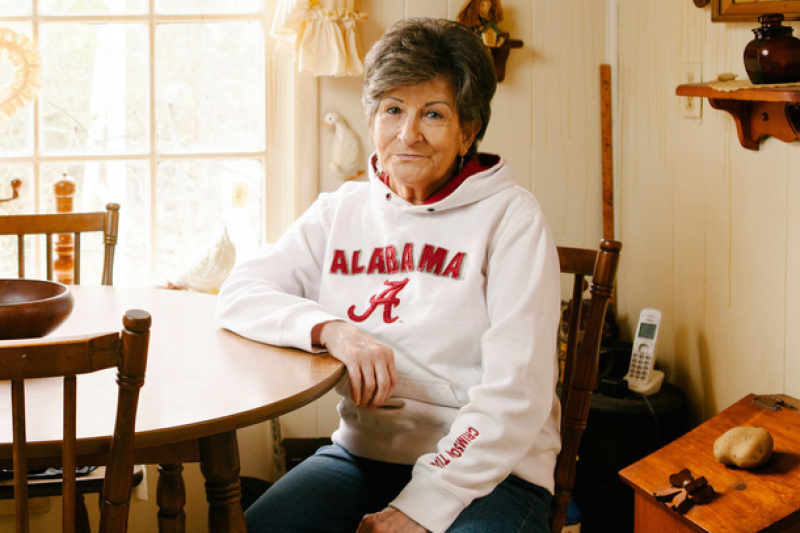
You may have noticed yesterday that I republished a post I did several months ago regarding a wonderful story about Bama fan and Finebaum caller Phyllis Perkins

That's the first time I've ever republished a blog post, and that happened for a reason. 

As you know, Phyllis's husband Don was diagnosed with inoperable and terminal stage 4 lung cancer some months ago, and this family, being of modest means, has been struggling financially. After I wrote that blog post, a trio of Finebaum callers (Rich Johnson, Johnny Lynn, and Fred Somers) started a GoFundMe campaign on Phyllis's behalf. What you may not know is that both Phyllis and Don were concerned about the cost of paying for his funeral.

Funeral costs are staggering these days--averaging between $8-10,000 in most places. The Perkins family, with both Phyllis and Don on Social Security, and already struggling under astronomical medical and daily living costs, would have been incapable of meeting those costs as they are already sinking further into debt. Medical debt is no joke, as I am well aware personally. Even if you're insured and/or on disability, there are some expenses that are just not covered. Even disability and Medicare only cover 80%, and the price of even the most conservative cancer treatment is just ridiculous. Add to that utility bills, food, house insurance, car insurance, etc. and you're looking at a family living at subsistence level. 

So Rich and Fred and Johnny started the GoFundMe campaign to give both Phyllis and Don some peace of mind. While Phyllis wouldn't ask for anything for herself, for Don--she would. A goal was set to raise enough money to cover the expenses of a funeral, and to take that worry at least off the shoulders of a dying man. The campaign began on November 20. Fred asked if they could link to my blog post--which was obviously a no-brainer--and we began to try to stir up interest on social media. Using fan sites--in particular Crimson Tide sites where Phyllis is somewhat of a legend--slowly we began to see money start to trickle in. By 8 pm on January 13, the campaign had made $4500. 

But then, something amazing happened. 

First off, Paul Finebaum told the story on his show Wednesday afternoon. You've heard me mention Finebaum before--a longtime Alabama journalist who now has an extremely popular (and unpopular) call-in show on the SEC Network. His relationship with Phyllis goes back years, to when his show was a local gig on AM radio and she used to call him up and bless him out for criticizing her beloved Coach Gene Stallings. About the same time, an article came out in the Birmingham paper. You can read it on their website:

The article also referred to this blog. So obviously, being a writer with books close to release and a savvy blogger, I reissued the original blog post with updated links. And then Johnny, Fred, and I--Rich is out of town on a business trip--began to pelt social media throughout the afternoon with links, pleas, and updates. The Finebaum show social media was joined by the SEC Network as well as other media sites/personalities in generating a lot of Twitter traffic. Fred called in to the Finebaum show. Other callers and followers began to call/tweet with questions. Longtime Phyllis foe Danny Kanell donated a thousand dollars to the campaign And then--Phyllis called the show herself. 

By the time she called, her campaign had already increased to around $20,000--almost five times the amount it had raised the night before.  Her call was just amazing--amazing enough that I can't describe it. You guys just have to hear it. 

And after she called, a miracle happened. 

First, a wonderful couple donated $10,000 to the campaign. But hundreds of other people gave what they could, from SEC Network's beloved Marcus Spears' huge donation to a little kid that emptied his piggy bank and gave it all--eight dollars. The child actually added to that later when he found roll of pennies, bringing the total gift to $13. People from all walks of life gave what they could. Alabama fans were joined by fans from the SEC schools--all of them. Some folks donated on behalf of their schools not even in the SEC--like Red Raider Ed (Texas Tech) who donated a thousand dollars. And every gift, regardless of size, was a pledge of love for this tiny Alabama woman who had somehow touched their lives--not only because of the tragedy she was fighting through, but because of her unswerving, unquestioning love for college football and her Alabama Crimson Tide.

In the past few hours, I've watched the total ticker edge up over $45,000. Radio and sports personalities all over the country are calling for their listeners/followers/readers to help--like most recently Cole Cubelic, for example, just off the top of my head. Some fans, like Fred from Plano made videos in support, encouraging people to make videos and donate. 


This outpouring of kindness and generosity has not only restored my faith in humanity, but is going to make such an amazing difference to this family that has already dealt with so much. With Don so ill, he's constantly cold. The effort to keep him warm is resulting in utility bills over $450--a staggering blow to a couple on Social Security. This money doesn't mean new cars and clothes; it means survival, at its most basic level. But it also means peace. Peace for Don, who no longer has to worry how Phyllis will survive once he's gone, and peace for Phyllis, who can now concentrate her attention upon the man she loves who is slowly, incrementally leaving her behind. 

But at the center of the story, for me, stands Phyllis, who is no longer quite as alone as she thought. 

Last night I spoke with her on the phone, and amidst all the tears and laughter and overwhelming gratitude, she told me a story that encapsulates who she is down to the last detail.


Twenty years ago, she was in someone's home who raised exotic birds for sale. She went to the bathroom, and while in there heard a little whistle. She looked in the window and found a cage with a tiny, weak cockatiel in it. The cockatiel was deformed, rejected by its mother, and unsaleable. The owner had put the bird in a cage without food and water so it would die. 

Phyllis took that bird home. She bought vitamins and the top food. Patiently, she taught that bird how to eat--the mother had attacked the baby and destroyed part of its beak, so Phyllis had to coax food into its tummy seed by seed. One claw was deformed, and all the feathers on the undersides of the wings were gone. But Phyllis didn't give up. She lavished care on her little patient. She held it to her chest so it could hear her heartbeat and be soothed. And once the little guy grew strong enough to grip, she taught it to sit on her head while she went about her day. 

One day, she noticed that when the Andy Griffith show came on, the little bird--now named Tiny Tide--would whistle along with the theme song. So she decided to teach him how to whistle Yea Alabama! (Full disclosure: as a Volunteer, I'm not too fond of the song personally, but as a Tide fan she wouldn't have taught Tiny Tide how to whistle Rocky Top, now would she?)

Every night, Tiny Tide sat on her head and she would whistle bars of Yea Alabama! to him. And before long, he did it! He could whistle the tune. One night soon after, Coach Gene Stallings called to see how her son was doing. (Hear about that amazing relationship in my original post about Phyllis) Tiny Tide was sitting on her head, and during the conversation he started to whistle Yea Alabama! Coach Stallings stopped cold. 

"What was that?"

Phyllis told him the story.

"Do you mean to tell me that's a cockatiel whistling Yea Alabama?"

She confirmed it. 

"Can you videotape that? I'd like to see it."

So a few days later, they recorded Tiny Tide's Bama repertoire and sent the videotape to Coach Stallings. When he got the tape, he took it into the viewing room. All the coaches, players, athletic department staff, and even the president of the University were brought it to hear the story of the tiny, deformed cockatiel whose own mother had rejected it, whose owner had shut it away to die, whose life was saved by a redoubtable woman who would not give up on it. And the payoff?

"After everything that bird's been through, after everyone gave up on him, he can now sit on that woman's head and whistle Yea Alabama! And if that bird can do that, WHAT CAN YOU DO?"

Talk about a lesson in overcoming adversity. That seems to be the lesson Phyllis has for everyone--and it's a lesson few people are truly qualified to teach.

So you see, there's a reason why people have responded to Phyllis the way they have. There's something about a woman who, despite all the turmoil and challenges of her life, can inspire people like that. No matter what the odds are, she just won't give up...whether it's on a football team or a dying bird. Tiny Tide is now 23 or 24--still singing, still whistling Yea Alabama! and still clinging to his beloved owner's head like she taught him when he was an unwanted, unloved little bird marked for death. He now comforts her as she faces one of the darkest hours of her life. 

If you can help, please head over to Phyllis's GoFundMe page and give what you can. If you are one of the over 600 people who already have helped, bless you for your generosity. If you can't donate, then please spread the word to people you know. But more than anything, keep her and Don in your prayers and thoughts. 

Tiny Tide will thank you for it, and will sing. 


Thursday, January 14, 2016

Re-Release of Phyllis from Mulga's Amazing Story With Her Crimson Tide. Gene Stallings, and her Troubled Son

Writer's note--this is a reissue of an earlier blog post about Finebaum super Fan Phyllis from Mulga and her incredible story about Coach Gene Stallings and the Alabama Crimson Tide. This post was featured in an article today which you can read at http://www.al.com/news/birmingham/index.ssf/2016/01/hey_paul_phyllis_from_mulga_ge.html. 

Right now, Phyllis needs our help. Her husband, Don, is suffering from Stage Four lung cancer and the Finebaum Family (led by super fans Rich from Atlanta, Johnny from Cullman, and Fred Somers) have created a GoFundMe campaign to help the family deal with soaring medical expenses. If this story resonates with you, consider contributing what you can at https://www.gofundme.com/RollTidePhyllis

Sometimes, the element that changes a casual fan into a fanatic is not straightforward. That element can be intangible, sometimes even unidentifiable. But I've found though years of associating with fans who live, breathe, eat, and die with their football teams that there's always a story, a single moment in time that takes a fan from just simply enjoying of the sport to a psychological and emotional involvement with their team that elevates the entire experience for them. Today's post is actually the original Song of the South, the story that inspired me to write this series, because it involves ordinary people who found a way to make their indirect association through Alabama football into something really extraordinary.

This Song of the South begins with a feisty little lady named Phyllis from Mulga, Alabama. If you follow the SEC or watch ESPN, you know who she is.

Phyllis is perhaps the most famous caller on the Paul Finebaum show which, as pretty much all of you know, is a daily devotion of mine. I set up my writing sessions so that I can have that four hour block off every weekday--mostly because there's no way I can write when Finebaum's going on in the background. Phyllis is a big part of why I am addicted to the show. She is a die hard Alabama fan, known mostly for her rants against self-satisfied sports media types like Colin Cowherd. Last year, she sneeringly referred to him as Colin Cow-turd, and apparently that really bothered him because he hasn't stopped talking about that yet.

When a caller to a radio/SEC Network show makes it onto SportsCenter because Colin Cow-turd is butt-hurt that Phyllis from Mulga called him a mean name, you know that caller has some serious chops.

To tell Phyllis's story--and I'll try to do it justice--we have to start at the beginning, and that's fifty-odd years ago. Phyllis's father was a huge Alabama fan, and brought up his five sons and daughter to be the same way. Her dad was in the military, and throughout all the moving the family remained devoted to the Crimson Tide. Phyllis's father died at the age of forty-four, when she was just seventeen. But until the end, he commanded his children to carry on his love for Bama--and they did. At his funeral, all the flowers were crimson and white, and all six kids continued to cheer for the Tide. So through the Bear Bryant years of the 1960's and 70's, Alabama football was an important facet of life. The family came together for games, and as the kids got married and had kids of their own, they passed that love on to the next generation.

In 1978, Phyllis had a son, Jesse*. Unfortunately, there were complications with the birth, and when he was born he suffered from oxygen deprivation. Jesse was rushed to ICU so they could get him breathing on his own. The trauma of his birth caused mild brain damage, which for Jesse manifested in a neurological condition called familial tremors on his right side. Familial tremors are similar to Parkinson's disease and cause a patient to shake, uncontrollably and sometimes rapidly. The condition can worsen through emotional stress, or when the patient is trying to perform motor skills that require precision--like eating with silverware, for example. Such a condition is trying, but for a child it carries a special kind of hell. With Phyllis's son, that hell began when he started school.

Kids can be nasty little critters, unfortunately, and Phyllis's son learned that when he started going to school. As the days went on, Jesse grew to hate school because the people in it were cruel to him. The other boys would bully him, sometimes right in front of teachers who did nothing to protect the child. For example, when Jesse was nine, he was sitting in his seat on the bus and the bullies grabbed him by the hair and dragged him back into the next seat. Then they ganged up on him, making fun of his shaking.

The little boy had no friends, no hope, no outlet. And while Phyllis and her husband tried everything they could think of to help their son, Jesse sank into a serious depression. During that time, Gene Stallings was hired as the head coach at Alabama. Stallings was one of Bear Bryant's famous "Junction Boys" when he was the coach at Texas A&M, and had worked for the Bear as a defensive assistant coach for both the 1961 and 1964 national championship teams. So Stallings was familiar to Phyllis and her family, as he was to most of the Crimson Tide faithful.

One day, Jesse carried his lunch tray to the table where he sat, alone, every day. As he was opening his milk, his right hand began to tremble and he spilled his milk. So while he was trying to control the tremors so he could drink his milk, a table full of boys came over to make fun of him. One of the little monsters jumped up on the table and shouted, "Hey everybody! Come over here and watch Jesse make a milkshake!"

When Jesse got home, he was crying his eyes out. Phyllis sat him at the table trying to soothe her sobbing son. "What's wrong, Jesse?"

"Mom, I want to die."

Hearing a child say such a thing is the kind of thing that freezes a mother's heart. Phyllis instantly exclaimed,"Don't you say that! Don't you ever say a thing like that!"

"But I do, Mom. If life is going to be like this, I don't want to live it," the boy cried, and then he told his mother what had happened in the cafeteria.

That was the final blow. Phyllis and her husband knew their son was in trouble. They took him to the doctor, who immediately sent the entire family for therapy. Jesse needed help, not only learning to cope with his disability but also the crushing depression that was the natural after-effect of the bullying he endured at school. Their therapist recommended that they enroll their son in a school where he could receive full-time therapy, and they did. Jesse could only come home on the weekends, and they tried to make those visits home special. For this family, that naturally involved Alabama football. Every Saturday, the family would allow the familiar rhythms and excitement of football to draw Jesse back into the family fold. It was now 1992, when Alabama won the national championship, and Jesse's love for Tide football grew into a serious hero worship of Coach Stallings--like many of the boys his age in Alabama did that fall.

Jesse remained away at school for a year. When he returned home, he was coping better with his disability physically. But when he returned to school, the bullying started again. Phyllis was forced to watch as her son's depression intensified, and desperately tried to think of something--anything--to help Jesse get better.

So one day in March of 1993, she picked up the phone and called the athletic department at the University of Alabama. When she said she wanted to speak to Coach Stallings, they put her through to his secretary. Phyllis asked if it would be possible to send Jesse a signed picture of the coach. "My son needs a hero," she explained.

The secretary replied, "I will take this to Coach Stallings personally. I'll be praying for y'all." Phyllis hung up the phone and that was that. She had no way of knowing when--or if--the coach would grant her request.

Three days later, a poster tube arrived in the mail. The autographed poster was of Coach Stallings standing in the middle of the football field. Jesse was delighted with the poster. The autograph read: Jesse, thank you for being my friend--Gene Stallings.

A lot of stories like Phyllis's would end here. But not hers. This is where the story grows, entwining this woman desperate to help her troubled son with the Alabama head football coach--and, as any SEC fan knows, the head football coach of the Crimson Tide is actually the most powerful man in the state as long as he holds that job. Phyllis and Jesse were blessed, really, that Gene Stallings was that man. For Stallings, father of a son with Down's Syndrome, understood what mother and son were going through. And for him, a simple poster just wasn't enough.

A few days later, the coach's secretary called Phyllis back. Stallings wanted to meet Jesse. So Phyllis, along with her excited son, older daughter, and two of her grandchildren, drove from Mulga, a little town outside Birmingham, to the University of Alabama football office in Tuscaloosa. They waited in the office with the secretary. "All of a sudden, the door opened and the biggest man I've ever seen in my life was standing there. He was so tall I thought he'd hit his head on the top of the door. My mouth fell open and so did Jesse's."

Before anyone could say a word, Jesse bolted across the room and hugged Coach Stallings around the legs. He looked up at this tall, kind-looking man and blurted, "Coach, do you really want to be my friend?"

Coach Stallings looked down at the boy and said gently, "What are you talking about, Jesse? I already am your friend."

Stallings sat down with the entire family, "He sat there and talked about football and talked to Jesse like he was grown up," Phyllis told me. "I could see right then a relationship was born. We were there for over an hour. He'd brought Johnny, his son with Down's Syndrome, to meet all of us and he was the most precious person I’ve ever met. After we went home, I saw the lights go off in Jesse’s eyes."

"Mama, I want to be the kind of man Coach is. He's a good man," Jesse said.

"Yes, son, he is. But you're special too."

"Why?"

"Because you are who you are, I got to meet my hero today too," Phyllis told her son. "Because he wanted to meet you."

That spring day in 1993 was the beginning of a relationship between the big, kindhearted football coach and Jesse. "In my closet, there's a big gold envelope," Phyllis said. "In that envelope are fifty-seven letters that Coach Stallings sent to Jesse. They're not lengthy. Sometimes it was simple, like  Jesse, I was just thinking of you today. You keep your chin up and make today a good day! And Jesse would write him back, and Coach would answer every letter."

When Jesse went back to school, he told some of his tormentors that he'd met Coach Stallings, but none of them believed him. So in one of his letters, he asked the coach what he should do about the bullying. Stallings responded by sending another package. One of the pictures they'd taken the day Jesse and Coach Stallings met was blown up poster-size, and with it Stallings had written: Jesse,  I want you to take this to school and show them that they are wrong. I am your friend and this proves it.

He also sent him a copy of the newspaper article after Alabama had won the national championship. There were seven pictures in the paper--pictures of the entire football team. And every player on that team had autographed the paper for Jesse.  Here’s something to take to school!  Stallings wrote.

Jesse took the poster and newspaper to school, and all of a sudden his entire life changed. Now the other kids wanted to know him because--wonder of wonders!--Jesse knew the head football coach at the University of Alabama! They were friends!

And from that point on, they left him alone.

"Because of Coach, Jesse got through to those kids at school that were bullying him. They turned around on a dime. They never bullied him again," Phyllis said, and I could hear the smile in her voice through the phone. "Jesse would tell them, 'Coach don’t care if I shake.' And the kids said, 'We’re sorry. We shouldn’t have done that.'

"Even one of the teachers who'd stood by and let those boys bully my son said, 'I saw those posters. I saw that newspaper. Chris is a mighty special child for Coach Stallings to do this.'

"'He’s not just special, he’s important,' I told her."

And once the story is put into its proper historical perspective, Stallings's actions become even more amazing.

"He had the defending national championship football team about to start spring ball, but he found the time to take Jesse in his arms," Phyllis said, her voice breaking. "Coach Stallings gave my son self-esteem...self-worth. Jesse followed his example. Coach told him not to get into drinking, not to do drugs. 'You can become somebody,' he told him. 'I'm depending on you to be a good son, like you've always been.' Now Jesse's a happy young men. I owe all that to Coach Stallings. He wasn't just a coach. He was a lifesaver. My husband and I were lost; brokenhearted. We didn't know what to do. Coach stepped in and gave my son a hero when he needed one the most."

Not every child with difficulties like the ones Jesse faced has a happy ending. Coach Stallings's own son, John Mark, died of a congenital heart defect in 2008. The coach chronicled his relationship with Johnny in a book he co-wrote with Sally Cook entitled Another Season: A Coach's Story of Raising An Exceptional Son. (Which is, by the way, an amazing read. I highly recommend it.) Every time Phyllis took Jesse down to Tuscaloosa, Coach Stallings would bring Johnny to meet them. "Coach‘s son was important to us. When you got hugged by Johnny, you got hugged. When he walked into a room, it all just got mellow. I was so proud that Coach Stallings got him to come each time we were there. That was one of the most blessed things—that we got to meet him too.

"When Johnny died it just broke our hearts. I couldn’t even stand the thought of how Coach Stallings and his wife felt. I couldn’t fathom it. When I talked to Coach again I broke down telling him I was so sorry. He said, 'The Lord has plans for all of us. Johnny wasn’t supposed to live til ten, but he showed them. He had a good life.' But I could tell his heart was torn into pieces."

One common theme I've found while listening to these Saturday Songs is how these teams, these schools and the people who love them find ways to do extraordinary things. Gene Stallings is an honored and highly respected man who has done great things throughout his life. On the University of Alabama campus is The Stallings Center, which is the home of the RISE school and its program designed to help children with disabilities from birth to age 5. The Stallings Center, established in 1994, now serves as a model for similar programs across the nation--partially funded by the golf tournament Coach Stallings hosts annually. And the playground at the center is named after his son.

But that's a big thing, something that in and of itself demonstrates palpably the positive influence Gene Stallings has. What makes Phyllis's story so poignant, so important, is the fact that while a bundle of fifty-odd letters, a few meetings, and some signed pictures might not seem like a big thing to the rest of us, for Jesse it was a monumental thing--an important thing. For Jesse, meeting Gene Stallings opened the door for a miracle--and that's an impact that cannot be quantified or dismissed. That miracle kept Jesse from becoming a statistic, it taught him how to find and make friends, and showed him that you can stand up to bullies and walk away the better man. That miracle has resulted in the continuing relationship between Stallings and Phyllis's family even today. "I talked to Coach Thursday before last. First thing he said was, 'How’s Jesse? You tell him I think of him all the time.' When I told Jesse, it just made his day. How can you be a better man than that?"

When people hear Phyllis explode on the Paul Finebaum Show, they probably don't give too much thought about why she loves the Alabama Crimson Tide as much as she does. She's not the kind of fan who can dissect football down to the X's and O's, or who can debate whether a dual option quarterback is better or worse than a traditional pocket passer. In fact, I've intervened online when some truly ignorant cretin is rolling out some horrible comment about Phyllis on Twitter. (Yes, I know...don't feed the trolls. I just can't stop myself...) Phyllis is a bigger person than I am. She doesn't care what anyone says about her. All she cares about is that Bama wins, and the bigger the better. And woe betide--yes, the pun is intentional--the poor schmuck (famous or not) who disses her football team or its coach. In fact, her long-running on-air relationship with Paul Finebaum began when he was making Finebaum-esque comments about Stallings on his show, and she started calling to ''straighten him out."

"I’ve always been fiery for the Tide," Phyllis said. "A lot of people think it’s me cheering for the team. But it’s about what the University of Alabama gave to me, without even knowing that they did. Coach Stallings and Alabama football are what caused all that to happen. When Coach helped Jesse, he helped me. When he helped my son, my spirits lifted and I was a much better person for it."

So even though I bleed Tennessee orange and white, I have to admit--Phyllis's story has given me a small warm fuzzy spot for Alabama. But only for 51 weeks a year, and never during the seven days that include the third (or fourth) Saturday in October when we annually play.

But for Coach Gene Stallings, who took the time to help a young boy find his way out of a dark labyrinth of torture and teach him how to grow up into a happy, well-adjusted young man who is the absolute pride of his mother's life...well, that warm fuzzy is now huge, and limitless. Because of the love Gene Stallings bore for his own son with special needs, he was uniquely qualified to share that love with another youngster who desperately needed a hero. Stallings became that hero not only for his own son, but for Phyllis's son and for Phyllis as well.

Phyllis is right. How could anyone be a better man than that? Perhaps--just perhaps, Gene Stallings is a hero for all of us.

Roll Tide.

*The name of Phyllis's son has been changed at her request. So because  I was so moved by his story, I substituted the name of my year-old grandson, who also had a rough start to life.

Monday, January 11, 2016

David Bowie, Iconographic Control, Blackstar, And Death

I knew there was a reason I couldn't sleep last night. 

For the past couple of days I've had a killer migraine--the keep one eye closed in order to see kind--and to say that my stomach has been upset is a major understatement. I used to have nasty migraines when I was young, but this is the first mega-migraine I've had in years. For some reason, around 5:30 this morning I randomly checked my Twitter--something I refuse to do before noon--and got gutted. 

David Bowie is dead. 

As I read the news that he'd been battling cancer for 18 months, all of a sudden a lightbulb went off in my head--and it was shaped like a Blackstar--the 10 minute jazz-pop fusion grotesque and yet enchanting title song/video of Bowie's latest...now last...album. If you haven't seen this video yet, you need to. 

Why? 

Because it's David Bowie saying goodbye to David Bowie...and demanding that we do as well.

Blackstar and its followup piece Lazarus share similar themes/iconography/images, and now that the news has churned its way into my writer's soul, I realize that Bowie, the chameleon before Madonna ripped her first fishnets, had not only reinvented himself once again but had done so with his own imminent death in mind.  


This video is vintage Bowie...without being vintage. From the beginning image of what could very well be a crash-landed and long dead Major Tom, through the bejewelled skull of the Thin White Duke to the blind prophet with button eyes (and I never thought button eyes could get creepier than in Gaiman's Coraline) to the three scarecrows being crucified as the sacrifice to a vicious and hungry entity--but particularly in Bowie's pronounced emaciation and the jerky, spasmodic movements of his acolytes the viewer is simultaneously horrified and entranced by the sheer artistic beauty and macabre power of Bowie's always haunting voice. 

From the day of execution
Only women kneel and smile
At the centre of it all 
At the centre of it all
--your eyes
--your eyes

Bowie's acolytes--or are they his murderers?--repetitively engage in their stop-motion dance of death, and the song suddenly changes:

Something happened on the day he died
Spirit rose a metre and stepped aside
Somebody else took his place, and bravely cried
(I’m a blackstar, I’m a blackstar)
How many times does an angel fall?
How many people lie instead of talking tall?
He trod on sacred ground, he cried loud into the crowd
(I’m a blackstar, I’m a blackstar, I’m not a gangster)

And when you follow that up with the video for Lazarus--

 
--the button-eyed prophet is now in a hospital bed, from which he rises to resurrect--literally--that thin white duke, jumpsuit, high heels and all. And then the lyrics--


Look up here, I’m in heaven
I’ve got scars that can’t be seen
I’ve got drama, can’t be stolen
Everybody knows me now

Look up here, man, I’m in danger
I’ve got nothing left to lose
I’m so high it makes my brain whirl
Dropped my cell phone down below

Ain’t that just like me

By the time I got to New York
I was living like a king
Then I used up all my money
I was looking for your ass

This way or no way
You know, I’ll be free
Just like that bluebird
Now ain’t that just like me


My God. It hits you like a punch in the gut. David Bowie, who has had such an incredible influence over six decades of music, wrote his own Requiem. He starred in his own Passion Play--The Passion of Ziggy Stardust is encapsulated in these two songs and particularly in the videos for them. He not only creates his death iconography, but he demands that we accept his version of events as his reality because he leaves us no choice. But he is not the scarecrow on the cross of martyrdom waiting for his monster to consumer him, he is instead a visionary without vision--a priest without any religion save the religion of self-command, and he compels us to cede our control to him as well. 

All of this is merely speculation. As much as I would love to channel Bowie, I would never presume to say that i know what he was thinking when he came up with this. I can only speculate, as a lifelong fan of Bowie's who has spent literally decades trying to decipher the workings of his brilliant yet tortured artistic muse. But this morning, when the news that David Bowie was dead at 69 filtered into my sleep deprived brain, all of the deciphering I've done over the past few weeks of Blackstar and then a few days ago Lazarus slammed into my mind with the completion one usually feels when the last piece of the puzzle slides inevitably into its proper place. 

Two life events we, as human beings, are absolutely incapable of influencing--our births and our deaths. Only with the latter can we find a way to reconcile ourselves to the inescapable finality of our final hours. But an artist like Bowie, beloved by legions of people aged 70 to 7, has another opportunity to impact those unknowns who loved them--and that is the artist's individual perception not only of death, but their own death. Just as Mozart spent his last hours feverishly fingering orchestration for his great final masterpiece Requiem, so did Bowie spend his last year of life masterminding the iconography of his final masterpiece. For believe me--Blackstar is Bowie's Requiem, his farewell to all his incarnations, his fans, and, at the end, himself. 

I can’t answer why (I’m a blackstar)
Just go with me (I’m not a filmstar)
I’m-a take you home (I’m a blackstar)
Take your passport and shoes (I’m not a popstar)
And your sedatives, boo (I’m a blackstar)
You’re a flash in the pan (I’m not a marvel star)
I’m the great I am (I’m a blackstar)

It is, at the end, both a curse and a gift. A curse against the inevitability of time and disease, and a gift of a true artist's last, brilliant self-image. Whatever happened, David Bowie didn't die cringing and weeping for his fate. He screamed defiantly into the night, and soared beyond all the petty fears that drive so many of us when facing our own mortality. 

Godspeed, David Bowie, to whatever distant star is your Blackstar. 

@all lyrics-- David Bowie, Blackstar (2016) VEVO Music

Monday, December 14, 2015

Let's Bring Cursed: The Bell Witch to a Merciful Close


First off, let me apologize for not posting this blog earlier. I'm recovering (slowly)from strep and not only could I not blog about the show, I couldn't even watch the show.

Only so much crap one can endure when sick. 

Apparently, I didn't miss too much since the first thing that happened the final episode was a pagan ceremony to appease the 'sentinel' that started the curse because John Bell desecrated the land--a ceremony that goes back centuries and was even mentioned by Julius Caesar in his self-aggrandizing book Commentaries on the Gallic Wars. Ancient Druids used to burn actual people, but later ones, instead of burning a human (as we Christians would be doing only a few centuries later) constructed an effigy of straw or wicker and set it on fire on the summer solstice. Pagans, Wiccans, and other non-Judeo-Christian religions and/or groups still practice this ceremony today. In fact, the ceremony has evolved into a popular kind of festival such as the Burning Man Project in Black Rock City, Nevada.  And if you look closely at the straw man John sets on fire, you'll note its similarity to the little corn dolly that showed up dangling from a tree in an earlier episode as well as the ones that showed up randomly in The Blair Witch Project--and the universality of the figure is probably the only thing that is keeping the Blair Witch producers from suing A&E for copyright infringement. 

I have to wonder, though, if there's a tongue in cheek nudge involved from the producers of Cursed. Maybe the 'straw man' is representative of how we usually use the phrase--an argument or position that is offered as a deliberate red herring by someone to his opponent, and then defended by him in such as manner as to deflect his opponent's real interest away from something that he wishes to hide. A sham argument, in fact. An intentional and premeditated falsehood, used to completely obfuscate the originator's real purpose or vulnerability. 

At any rate, the burning of the straw man was touted as the way to appease the sentinel who was cursing the Bell family as a result of the desecration of sacred land. It is irrefutable that there are many Native American burial sites in and around Adams and on the old Bell homestead. There's even an empty grave in the Bell Witch Cave. Contemporaries of the haunting themselves believed that there was potentially a Native American tie to the entity, and I know for a fact that belief has persisted through the oral and written legends in the area.

But something doesn't quite ring true on that front for me. Remember when we discussed what type of haunting the Bell Witch was and I hypothesized that the entity was inhuman. Never having walked the earth as a human, that would relegate the spirit to a demonic-type haunting--something that I believe is borne out by the events of the Bell haunting and the torments employed against not just the family but neighbors, slaves, and even total strangers. In fact, John Zaffis appeared to share my opinion on the show--which makes me wonder something very basic.

They had a foremost demonologist on set and yet they still thought burning a Blair Witch effigy in a mockery of an ancient pagan ceremony was going to resolve the 'curse' aka/the haunting on the Bell land? I refuse to believe that Zaffis was standing behind the camera going, "Yeah, man--burning a six foot tall corn dolly will solve all your problems." And so, I have to believe that no one bothered to ask Zaffis what to do.

And the only reason they wouldn't have? Because there was never any intention of resolving the haunting, and because there was never any curse. So imagine my surprise when--shock!--the ritual didn't work.

I'm sure it has nothing to do with the fact that if someone is going to undertake 'magic'--and make no mistake, that's what this ritual was intended to be--then that person needs to

1) Believe in the religious/magical source of the ritual.
2) Know what they're doing.
3) Mean it.

I don't think any of those elements were in place.

Which brings us to Pastor James Vivian.

*sigh*

Folks, I've been in that cave countless times. I've explored the land. I've gone to the cemeteries both during the day and in the middle of the night. I've heard organ music in a field in the middle of nowhere, dodged creepy animals sitting in the middle of the road, and when I knocked on Mr. Eden's door while he was at the store heard the furniture shifting around inside the house. And believe me when I tell you, sitting in the Bell Witch Cave shouting "I break the curse!" isn't going to do a damn thing but make whatever inhabits that place laugh. A lot. Loudly.

Kind of like I did.

Keep in mind, too, that the Bells were devout Christians, and two of their staunchest allies and supporters during the haunting were the two local ministers. But that didn't affect Kate, because she not only could quote chapter and verse of the Bible, sing hymns, and argue theology but she actually attended church services both with and without the family. Facts which are documented both within and outside the family. So while I cannot dispute the power of prayer, I have to say with one hundred percent certainty that nothing has changed in Adams--or the cave.

Also, too, I seriously doubt that the current owners of the cave (who are turning it into a tourist spot) would permit anyone to exorcise their pet profit-making scheme. No way. Adams doesn't have much--a deserted pre-Depression downtown of crumbling buildings no bigger than a block, a Dollar Store, a community center. The annual Adams Threshers Show is awesome fun, but aside from that all that's there are farms and the Witch. That's it. So the idea that they would jeopardize that is ludicrous.

In the end, A&E's Cursed: The Bell Witch was nothing but...well...bullshit. It was obviously a (poorly) scripted show, that distorted the legend and the history in order to make spurious and patently ridiculous claims regarding this so-called curse that, according to John's own pre-show monologue, apparently only has affected what? Three guys in two hundred years?

Some curse.

And what's lost in Hollywood crapola like this is the REAL legend, the REAL human witnesses, the REAL toll upon the small frontier community of Adams. And not only that, but the absolutely ridiculous way the show portrayed the people of Adams, Robertson County, and Tennessee is grossly insulting and stereotypical. Showing people at a local diner as suspicious people who have it in for the two 'investigators' is just stupid. And throughout the whole affair, the two men--who are from Mississippi, after all, and should be careful about what they condescend to--acted as if they thought their lives were in some kind of danger, running around in the woods with their guns AS IF A BULLET COULD STOP A GHOST.

Almost criminally negligent, in my opinion, and the show's producer's should never be cut loose ever again in public to film any sort of *reality* show ever again.

So there you have it. We all wasted five weeks of our lives on a show that was a piece of garbage, with absolutely nothing to recommend it from beginning to end. If you are interested in the Bell Witch, I recommend that you get the books by MV Ingram and Charles Bailey Bell. They will tell you the real story. Go to Adams, and meet the wholly friendly and kind folks who live there. Go through the little museum and the restored slave cabin, check out the cave and the cemetery. And go in October, so you can check out the play that my old friends from the theater department at APSU put on there every fall. They are all much better actors than I ever was, and I had a nice little career on the stage for a full decade after leaving the area.

Because you'll find out everything you ever wanted to know about the legend that way, instead of wasting your brain cells on a farce like Cursed: The Bell Witch.

A&E should be ashamed of itself. This whole ordeal has convinced me of one thing at least.

I'll never watch another show on that channel, and I strongly advise you to do the same.

So let's toss this stupid straw man on the bonfire, watch it burn, and head to a bar. Much better way to spend our time.